Join the Heart Mind Breathe community and claim a free meditation

Category: Heart Mind Breathe

  • Embodied presence in performance

    Embodied presence in performance

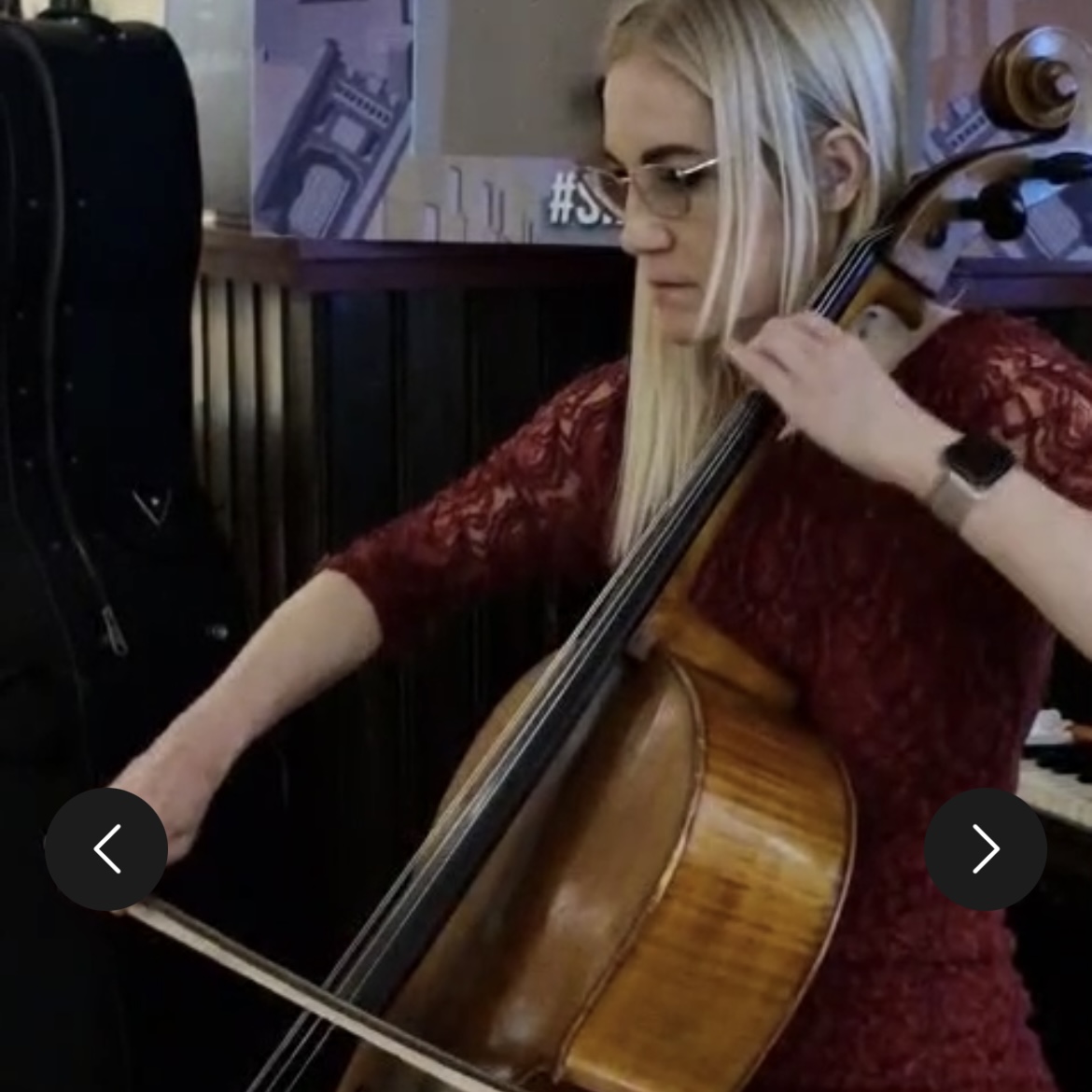
    Time is never available in the quantity I’d like when getting ready for a musical performance – this always been more the case with so many competing weekly commitments. In the rare moments that I steal to reconnect with practice and familiarisation with the music, it strikes me that the deeper goal is to become increasingly at one with the instrument. What is it to apply mindful attention to instrumental practice?

    I return to embodiment, a key teaching of mindfulness.

    With the cello this means cultivating a growing fluidity between the fingers of the left hand and the motion of the right, bowing arm, so that both act in harmony, with ease and intention. This physical alignment directly shapes sound rather than being purely technical. My intention of sound quality is in terms of depth of expression and clarity.

    With the piano it’s about channelling the weight of the entire hand behind each finger, so that every movement is made with only the tension that’s truly needed. Each finger is supported by the hand, each hand by the arm, and the arms by the whole body – creating a chain of support that enables freedom, control and a resonance in the sound.

    With recorder, too, it’s about economy of motion, lifting each finger only as much as needed above the holes. Mastery comes from isolating fast, awkward combinations and working through them rhythmically, shifting emphasis across different notes to expose weaknesses and build precision.

    These embodied principles are at the heart of how I teach instrumental technique, moving beyond mechanical repetition into a space where technique enables expression and movement becomes music.

  • A different take on distraction…

    A different take on distraction…

    One of my first experiences of formal meditation was as part of a group advertised on ‘meet-up’, a short walk away from where I live, back in April 2012.  The opening instruction of that first and only (for me) group meeting remains firmly imprinted in my mind as “shut down all thoughts !”

    Well cue instant feelings of failure…This command wasn’t relatable or possible to my own mind, exacerbated by the sense that it somehow was for others.  This reinforced my long-held notion that some people can meditate and others who can’t, holding myself in the latter.  I had probably believed this for years which had put me off trying any kind of meditation properly.  This wasn’t a mindfulness meditation group.

    Since then I found the approach in which thinking, as one area of human mental activity for, is normalised from the start.  The mind is viewed as another sense doorway.  We would no sooner expect our mind to stop having thoughts as we would the ears to stop hearing or the eyes to stop seeing.  Further to that it can be described as a ‘magical moment’ when we realise that the mind has been ‘lost’ in thought because of the equal number of times to being lost it is found. 

    Infinitely more approachable as a method?

    Even with this generally accepted understanding of things I still hear questionable interpretations of the ‘training of the mind (body /heart)’ which takes place in this practice.  Interpretations can take the form of suggesting that we’re seeking increasingly fine levels of concentration as though being ‘rightly mindful’ equals being concentrated, and that we ought to strive for increasingly prolonged periods of this.  What’s the trajectory of this?  Less and less distraction..?  Ultimately never being distracted ?!

    These interpretations feel very tight.

    Is distraction always wrong?  Maybe it’s right that it happens. Maybe when the mind wanders and when we come back, if we’re not so bothered we might actually feel quite balanced or refreshed, with a bit more energy and the attention sharper.

    Why is this ?

    Likely to be for millions of reasons.  But what we mostly need to understand it that it was right, at that moment for us to be distracted.

    There is often an intuitive brilliance to allowing minds to wander, because they do create.  And so there can be a beauty to this mind wandering.

    We also need to acknowledge the wisdom in distraction when we’re not sufficiently resourced to feel what we are faced with.  So wisely bringing the attention to somewhere else can take the pressure off, ie, when feeling pain in the body, an area I have personally practiced with a lot.  Distraction can be the wise response.  So much of this practice can be discerning the difference between a wise and an unwise response.

    With this, I suggest that distraction isn’t only inevitable but necessary, in meditation as in life.

  • New Blog Coming…

    New Blog Coming…

    I’m excited to announce that my new blog is coming soon – watch this space!