Join the Heart Mind Breathe community and claim a free meditation

Tag: inner peace

  • The millimetres mean more than the miles

    The millimetres mean more than the miles

    The millimetres mean more than the miles

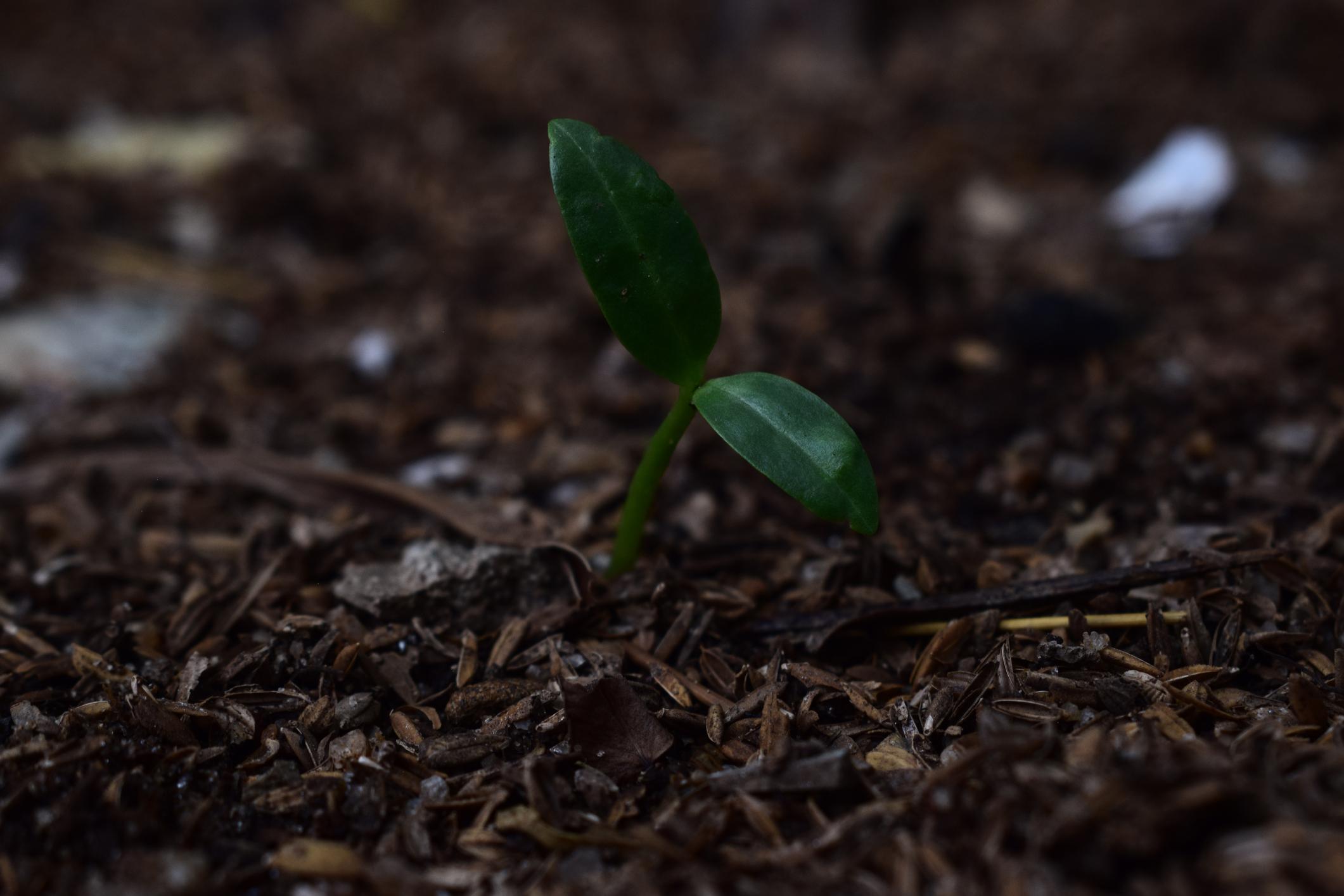
    We often imagine change as something dramatic. A sweeping transformation. A moment where everything shifts at once through a bold decision. But in lived experience, change is rarely like that. It’s quieter and smaller. It can be almost imperceptible. Perhaps a millimetre shift.

    Maybe the millimetres matter more than the miles.

    Meaningful movement in our inner life happens in tiny increments. A slight softening in the shoulders, a moment of noticing rather than spiralling, a half-breath of awareness, a quiet choice to pause instead of push. These are not grand gestures. They’re millimetres. And they accumulate.

    In continuing to explore trauma-informed spaces over the past few years, I often find myself coming back to something TRE teacher Steve Haines once said:  “the quickest way to heal trauma is to go slowly.”

    This is because in trauma and emotional overwhelm, the nervous system doesn’t respond to big leaps; it responds to the smallest possible foothold. Sometimes that’s just a point of steadiness in the storm, or a sensation that feels even slightly less threatening, or a breath that opens things by a fraction. Even if we can only touch that anchor for a second, that second matters.

    Many people discover that trying to force calm only creates more tension. In my own practice, I began to notice how quickly the system could tighten when there was even a subtle push to settle or fix what was happening. Over years of working with these practices, what became clear to me was that support often arrives through something much smaller and more understated.

    In moments when things inside feel chaotic or flooded, the most helpful anchor is often subtle.

    It might be the faint feeling of feet on the floor, the weight of the body in the chair, or the movement of a single breath. Not a profound grounding or a wave of relief, just the smallest point of contact. It can often only be touched for a second or two before attention is pulled away again.

    This kind of noticing doesn’t happen by accident. It develops through the gentle, repeated training of awareness, through returning attention to small, embodied moments again and again over time, until the nervous system begins to recognise them as familiar ground.

    Even a second of contact matters. Touching it, losing it, and then touching it again, this small rhythm begins to show the nervous system that some ground is still there, even briefly. Over time, that point of contact becomes something more reliable to return to, because even though the storm hasn’t disappeared, we begin to learn where our ground is.

    This is the kind of capacity we begin to build, gently and step by step, inside the 7-week SIT course, where we explore cultivating capacity through different spheres of awareness, including the body, thoughts, emotions, the senses, and self-compassion.

    *

    *

    *

    *

    We often overlook these micro‑shifts because they don’t feel impressive. They don’t announce themselves. They don’t give us the satisfaction of saying, “Look, I’ve changed.” But they are the change. They’re the quiet repatterning of how we meet our experience.

    It might be the faint feeling of feet on the floor, the weight of the body in the chair, or the movement of a single breath. Not a profound grounding or a wave of relief, just the smallest point of contact.

    None of these moments look like much on their own. But over time, they begin to alter the trajectory. A one degree shift in direction doesn’t look like anything at the start. Walk far enough, though, and you end up somewhere entirely different.

    This is why mindfulness, or any embodied practice, can be so powerful. It teaches us to value what is subtle and to trust what is small. Over time we begin to recognise that the nervous system doesn’t transform through force, but through repetition, through these small, compassionate nudges.

    The miles are made of millimetres.
    And the millimetres are where real change happens.

    When we stop waiting for the big breakthrough and start honouring the small ones, something softens. We stop treating ourselves like a project to be fixed and begin relating to ourselves as a process to be tended.

    This is where real change begins, not in dramatic leaps, but in the quiet, steady accumulation of millimetres.

  • Basic Sanity: Returning To What’s Already Here

    Basic Sanity: Returning To What’s Already Here

    When people come to meditation, it’s often because something in life feels unmanageable. We hope for relief, for a shift, for a special mindstate to lift us out of the struggle. And it’s quite natural that when experience feels intractable, we naturally look for something, anything, that feels different from what we have now.

    You may be here feeling confused, exhausted, or quietly disappointed that nothing you’ve tried so far seems to make any real difference.

    There are moments of pure panic and overwhelm where there genuinely feels like nothing to reach for. The fear is total, the circumstances feel unbearably heavy, and the combination of inner and outer pressure is so tough that no practice is accessible.

    I want to name this clearly, because I have been here many times, and it matters to acknowledge this truth before speaking about meditation as anything larger or wider than that.

    Sometimes it helps to name a concrete example, not to dwell in it, but to ground what might otherwise stay abstract.

    I am taken back to an example of such a time when even going off to sleep meant bracing for the electric-shock pain in my lower back, which came each time I drifted off and continued through the nights. It was in those moments that the despair was so complete and nothing felt reachable.

    It is precisely because of this reality, that meditation needs -so often- to be understood and seen differently to the way it is understood and seen. Meditation isn’t something to be deployed in those moments as a ‘way out’. It needs to be viewed as something cultivated in the wider field of our lives.

    I’ve often heard people refer to the fact that they have ‘tried breathing, tried mindfulness… etc’…with the desire of something…”working”…in such moments.

     And this reflects the common, wide (mis)understanding, that mindfulness is something to be taken like a pill, in difficult moments: take it and the difficulty will go away. 

    One of the things we first establish in mindfulness is that meditation doesn’t promise special moods or altered experiences. Its real gift is far quieter, far more ordinary, and ultimately far more reliable. This is because the practice begins to build our capacity for basic sanity, a groundedness that doesn’t actually depend on everything feeling good.

    Nothing here is being offered as a promise, a solution, or something to convince you of, only as an invitation to notice what is already here and how easily and repeatedly it tends to be missed.

    Basic sanity is the capacity to be less hooked by the powerful pulls that dominate both society and our own minds. Advertisements, endless stimulation, the pressure to perform, the pressure to improve, these forces tug at our attention constantly. They stimulate the senses but rarely nourish the heart.

    And our minds echo these same forces back at us, sometimes even louder. We know this pull intimately in the habit of rumination: the way the mind insists that if we just think about a regretted situation one more time, we might finally think our way out of the pain it’s causing. Meditation isn’t about escaping all this; it’s about seeing it clearly enough that we’re not automatically seduced by it.

    At the heart of practice is an impulse grounded in different values:

    • compassion
    • depth
    • closeness to life
    • the wish to feel things more fully and respond more freely

    These values don’t usually arrive as strong convictions, but as something quieter and more tentative; they present a subtle pull toward living with a little more honesty and steadiness.

    These values may start small, perhaps a faint sense that there must be a way to live with more honesty or more steadiness. But even that faint impulse is sane. It senses the possibility of being less swept up, less reactive, less lost.

    As practice deepens, we begin to cultivate a steadiness that’s not easily thrown off its centre. We become less tangled in unnecessary drama, less convinced by the frantic “values” of the world, less pulled into craving or resistance. This doesn’t mean life stops being difficult. It means we’re less exhausted by the struggle against it.

    Over time, the value of a steady and consistent practice is that our minds are able to adopt greater flexibility as a result of becoming stronger in our intentionality.

    And in this way the quiet mind, the spacious mind, the clear mind…starts to feel less like an achievement and more like a home we return to.

    As a consequence of an ongoing commitment to practising steadiness, when moments of overwhelm arise they are able to be met with less surprise and more of a sense of ground, rather than the feeling of being completely taken over.

    Basic sanity is not some distant ideal. It’s the simple capacity to be here, with what’s real, without being pulled entirely out of shape by it. And with practice, this becomes less of a momentary experience and more of a way of living.

    This perspective is what quietly frames my work.

    This is also why I continue to love exploring the spheres of awareness with people in the course I run, as a shared inquiry into the steadiness and basic sanity that this practice makes possible.