Join the Heart Mind Breathe community and claim a free meditation

Tag: personal growth

  • The millimetres mean more than the miles

    The millimetres mean more than the miles

    The millimetres mean more than the miles

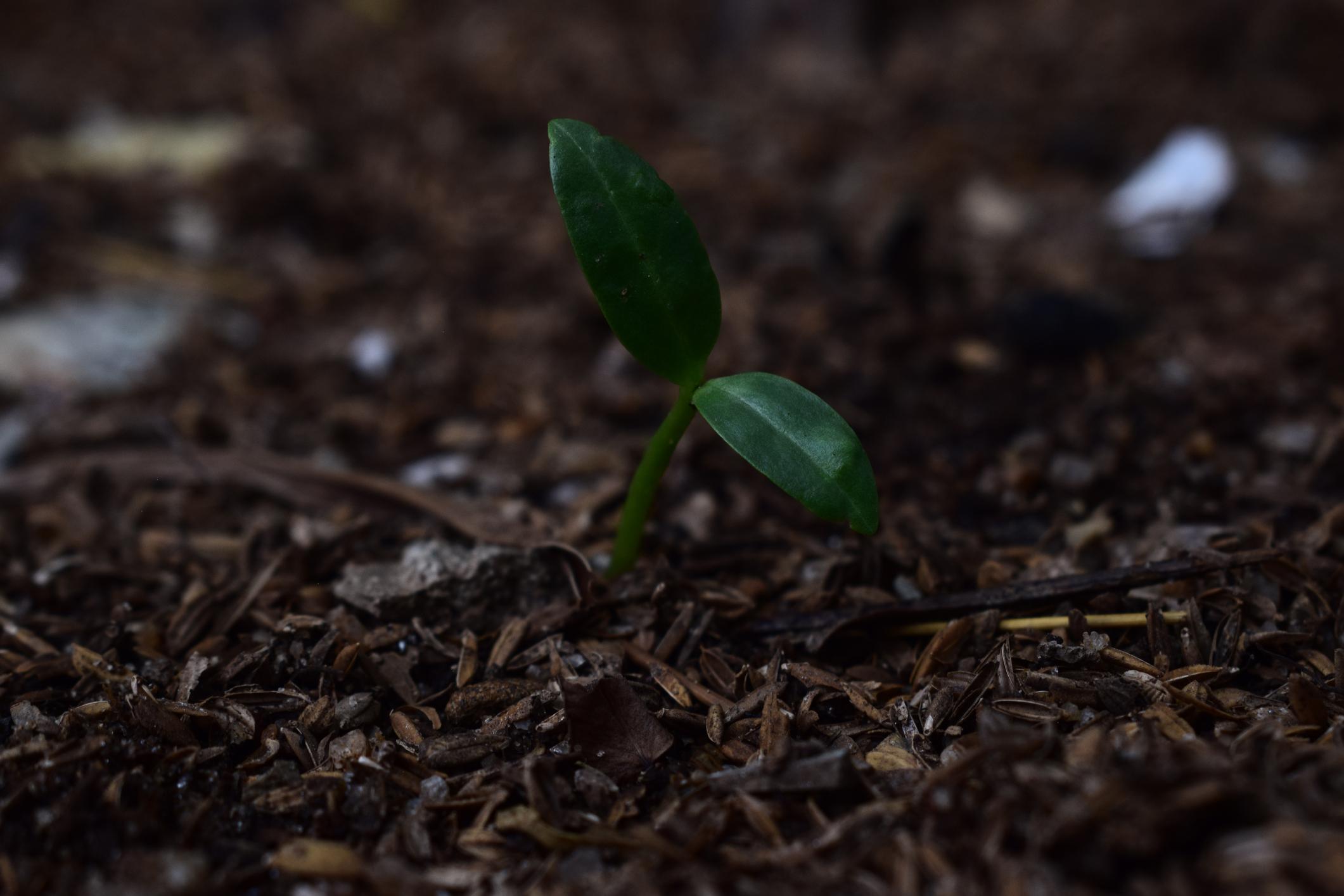
    We often imagine change as something dramatic. A sweeping transformation. A moment where everything shifts at once through a bold decision. But in lived experience, change is rarely like that. It’s quieter and smaller. It can be almost imperceptible. Perhaps a millimetre shift.

    Maybe the millimetres matter more than the miles.

    Meaningful movement in our inner life happens in tiny increments. A slight softening in the shoulders, a moment of noticing rather than spiralling, a half-breath of awareness, a quiet choice to pause instead of push. These are not grand gestures. They’re millimetres. And they accumulate.

    In continuing to explore trauma-informed spaces over the past few years, I often find myself coming back to something TRE teacher Steve Haines once said:  “the quickest way to heal trauma is to go slowly.”

    This is because in trauma and emotional overwhelm, the nervous system doesn’t respond to big leaps; it responds to the smallest possible foothold. Sometimes that’s just a point of steadiness in the storm, or a sensation that feels even slightly less threatening, or a breath that opens things by a fraction. Even if we can only touch that anchor for a second, that second matters.

    Many people discover that trying to force calm only creates more tension. In my own practice, I began to notice how quickly the system could tighten when there was even a subtle push to settle or fix what was happening. Over years of working with these practices, what became clear to me was that support often arrives through something much smaller and more understated.

    In moments when things inside feel chaotic or flooded, the most helpful anchor is often subtle.

    It might be the faint feeling of feet on the floor, the weight of the body in the chair, or the movement of a single breath. Not a profound grounding or a wave of relief, just the smallest point of contact. It can often only be touched for a second or two before attention is pulled away again.

    This kind of noticing doesn’t happen by accident. It develops through the gentle, repeated training of awareness, through returning attention to small, embodied moments again and again over time, until the nervous system begins to recognise them as familiar ground.

    Even a second of contact matters. Touching it, losing it, and then touching it again, this small rhythm begins to show the nervous system that some ground is still there, even briefly. Over time, that point of contact becomes something more reliable to return to, because even though the storm hasn’t disappeared, we begin to learn where our ground is.

    This is the kind of capacity we begin to build, gently and step by step, inside the 7-week SIT course, where we explore cultivating capacity through different spheres of awareness, including the body, thoughts, emotions, the senses, and self-compassion.

    *

    *

    *

    *

    We often overlook these micro‑shifts because they don’t feel impressive. They don’t announce themselves. They don’t give us the satisfaction of saying, “Look, I’ve changed.” But they are the change. They’re the quiet repatterning of how we meet our experience.

    It might be the faint feeling of feet on the floor, the weight of the body in the chair, or the movement of a single breath. Not a profound grounding or a wave of relief, just the smallest point of contact.

    None of these moments look like much on their own. But over time, they begin to alter the trajectory. A one degree shift in direction doesn’t look like anything at the start. Walk far enough, though, and you end up somewhere entirely different.

    This is why mindfulness, or any embodied practice, can be so powerful. It teaches us to value what is subtle and to trust what is small. Over time we begin to recognise that the nervous system doesn’t transform through force, but through repetition, through these small, compassionate nudges.

    The miles are made of millimetres.
    And the millimetres are where real change happens.

    When we stop waiting for the big breakthrough and start honouring the small ones, something softens. We stop treating ourselves like a project to be fixed and begin relating to ourselves as a process to be tended.

    This is where real change begins, not in dramatic leaps, but in the quiet, steady accumulation of millimetres.
  • Rooted and Reaching

    Rooted and Reaching

    🌿 The Nourishment We Carry

    Trees feed themselves through an intricate root system that pulls water and nutrients from the soil. This process is quiet and constant. Hidden underground, the roots are doing the work of drawing in minerals that sustain every branch, leaf, and bud. The tree doesn’t rush; it trusts the slow, steady flow of nourishment rising from below.

    We do something similar. The nutrients we take in -from food, air, and sunlight -move through our bloodstream and into our cells, keeping our bodies strong and balanced. What trees absorb through roots, we absorb through veins. Our systems are internal, but they echo the same principle: life depends on circulation.

    But nourishment isn’t just physical. Trees respond to light, air, and the changing seasons. They bend with the wind, rest in winter, bloom when conditions are right. We, too, are shaped by what we take in emotionally and relationally, what we listen to, who we connect with, how we rest.  Tension can be softened with a kind word. Walking outdoors can calm the nervous system. A moment of stillness can restore balance.

    It’s all part of our internal and external ecosytem. Like trees, we need to be fed consistently to grow well, not just what we consume but how it circulates through us, keeping everything in rhythm. Growth is as much integration and flow, as it is about intake, and the importance of these quiet systems that sustain us.

    🪵 The Stillness that Holds Us

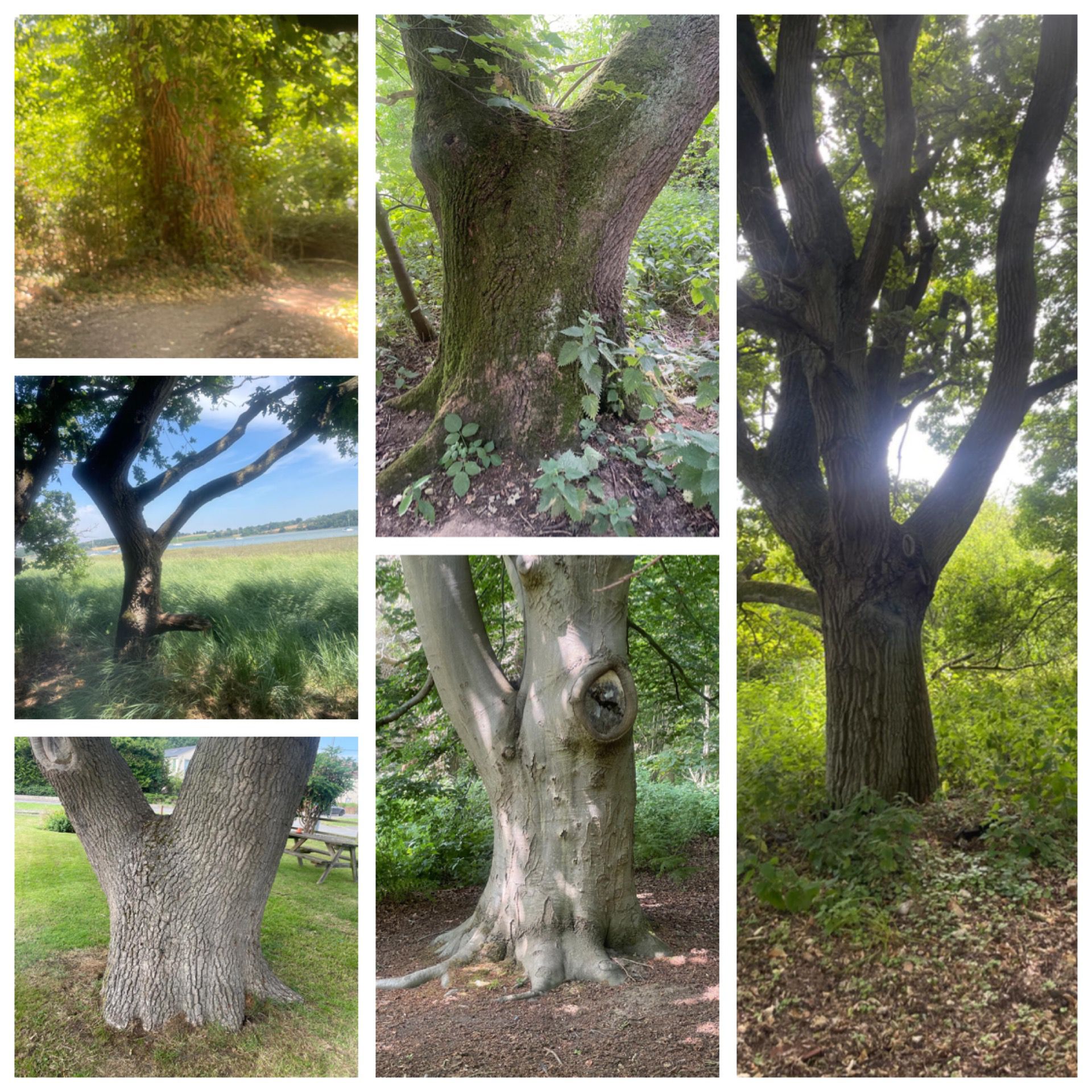
    Once whilst on a silent five day retreat was the instruction to go and stand opposite a tree, to feel commonality with it.

    An easy place to start in exploring this is the grounded rootedness at the base of the tree trunk, its roots reaching deep into the ground. It can be so helpful to feel that we, too, are rooted within solid ground.

    To stand before a tree is to be reminded that stability exists. 

    There are many moments during the day, be they fleeting or enduring, when the whirlwind of thought lifts us from ourselves. We can be swept up in mental activity for indefinite lengths of time, unaware even, that we have come away from a sense of ground.  Blown around like the weather and lacking a sense of stable ground beneath us.

    Trees offer the antidote. We could think of it as replugging the circuit: it’s as if without this electrical charge plugged into the ground we are susceptible to every wind that blows, every emotion, thought or mindstate. Grounding ourselves is like a re-entry into a slower current, an earth-borne vibration that steadies the nervous system.

    Trees can remind us that with a sense of our charge plugged into the earth, we don’t have to be tossed by every wind. We are wired, quite literally, to connect to the earth’s charge, to feel supported, held, regulated.

    This has always something of a fascinating area to me, ever since learning about the contemplations of the body in terms of earth, air, water and fire.  I could sense the vast potential of the earth element within trauma healing.  As if in confirmation of this, I learnt soon after that these modalities make much of grounding and stabilisation at their core.

    🌀 The Shape of Becoming

    We often talk about healing as something to achieve, almost as if new levels of growth are untouched by what came before. But isn’t it more the case that real growth is from accumulation of, rather than overwriting experience? Trees remind us of this so beautifully.

    When we look closely we can see where the bark thickened during a hard season, where water was scarce, where lightning kissed the trunk. Rather than scars these are integrity made visible. To honour experiences like these is to reject the pressure to be endlessly smooth or untouched. In a similar way I say that I grew through the fire, not over it. My depth isn’t formed from leaving stuff behind but from integrating it.

    The trees’ rings hold memory in form. Each ring corresponds to a year in the tree’s life. And in the same way, each year of our life leaves a trace, visible or felt so that our inner architecture is  built incrementally, from the inside out. Bodies and minds archive stories: grief that stretched us wider, joy that softened something brittle, stillness that taught us to listen to our heart. These rings are not always symmetrical, and nor should they be. They reflect how we’ve metabolised experience rather than just survived them. They hold the shape of us, year by year, without needing explanation.